


The internet is constantly changing, with websites disappearing and content being deleted. This can make it seem like valuable information is lost forever. While search engines like Google focus on finding active web pages, there are many forgotten sites that remain hidden.
But there is hope! There is a specialized search engine that is dedicated to finding these lost digital treasures. It works like an archaeological tool for the internet, going deep into the web’s history to find and preserve billions of archived pages that would otherwise be forgotten.
This effort to preserve digital content is important because it allows us to:
- Study how the internet has evolved over time
- Find evidence for legal cases
- Verify facts about past events
- Learn more about the history of the internet
In this article, we will explore how this unique search engine works and why it is important for preserving our digital heritage. We will also discuss the challenges involved in archiving the web and the ethical considerations surrounding digital memory.
Get ready to discover the fascinating world of forgotten websites and how specialized search technology is giving them a second chance!
Understanding Forgotten Websites and Their Importance
A forgotten website exists in digital limbo – technically alive but practically invisible to modern search engines. These digital artifacts vanish from standard search results through various paths:
- Domain expiration when owners stop paying registration fees
- Server shutdowns due to discontinued hosting
- Content removal by website administrators
- Technical changes in web protocols or platforms
- Company bankruptcies or mergers
The cultural significance of these lost websites runs deep. Early personal homepages capture the raw creativity of Web 1.0, while defunct company sites document the rise and fall of dot-com enterprises. Ancient forum threads preserve authentic conversations about historical events as they unfolded.
Research by the Internet Memory Foundation reveals that 88% of web content created before 2003 has disappeared. This digital decay affects multiple sectors:
- Academic Research: Scholars lose access to primary sources cited in past studies
- Legal Documentation: Court cases reference web content that no longer exists
- Historical Records: Government and institutional websites change without maintaining archives
- Cultural Heritage: Early internet art, experimental websites, and digital communities vanish
A 2021 study in the Digital Preservation Quarterly found that the average lifespan of a webpage is just 90 days. This rapid turnover creates gaps in our collective digital memory. Dead links and error messages replace once-vibrant online spaces, leaving researchers, historians, and curious minds without access to valuable information.
The preservation of these digital artifacts becomes crucial as they hold irreplaceable snapshots of technological evolution, social movements, and human expression in the early internet age.
The Wayback Machine: A Niche Search Engine for Forgotten Web Pages
The Internet Archive, a non-profit digital library based in San Francisco, launched the Wayback Machine in 2001 with a bold mission: to preserve the internet’s history. This specialized search engine acts as a time capsule, capturing and storing snapshots of web pages as they appeared at different points in time.
The Scale of the Archive
The scale of the Wayback Machine’s archive is staggering:
- 250+ billion web pages preserved
- 20+ years of internet history
- 700+ billion URLs indexed
- 45+ petabytes of data stored
How Users Can Access the Archive
Users can access this vast digital archive through two primary methods:
- URL-based search: Enter any website address to see how it looked at different points in time
- Keyword search: Find archived homepages containing specific terms or phrases
Understanding the Interface
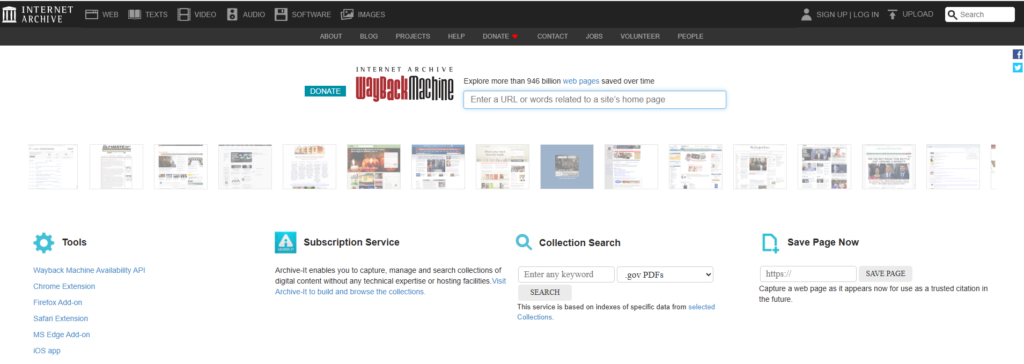
The platform’s interface displays a calendar view showing when specific pages were captured, with darker blue dots indicating multiple saves on a particular date. Each snapshot preserves the page’s text, images, and layout as they appeared at that moment.
Why Preservation Matters
According to the Internet Archive’s founder Brewster Kahle:
“The web is ephemeral. Web pages change and disappear all the time. The Wayback Machine exists to preserve this digital heritage for future generations.”
Real-World Impact of the Wayback Machine
The platform has proven invaluable during significant historical events. When Hurricane Sandy struck in 2012, the Wayback Machine preserved crucial emergency information from government websites that later went offline. During the COVID-19 pandemic, researchers used it to track changes in public health guidance and information.
Exploring Obscure Web Tools
In addition to its primary function, the Wayback Machine also serves as a gateway to explore some obscure web tools that can enhance your online experience. These tools can help you navigate the internet more efficiently and uncover hidden resources.
Continuous Evolution of the Wayback Machine
Moreover, it continues to evolve by adding new features like:
- Browser extensions for instant archiving
- API access for developers
- Bulk downloading capabilities
- Advanced search filters
Recent updates have improved the platform’s ability to capture complex web elements, including social media embeds and interactive content, making it an increasingly powerful tool for digital archeology. For those looking to further expand their online knowledge and productivity, exploring hidden websites revealed by such niche search engines can be an enlightening experience.
How the Wayback Machine Finds Forgotten Websites That Mainstream Engines Ignore
Google, Bing, and other mainstream search engines focus on crawling and indexing active websites, prioritizing fresh content and current relevance. The Wayback Machine takes a completely different approach – it captures and preserves web pages regardless of their current status.
How the Wayback Machine Archives Websites
The archival process works through:
- Comprehensive Crawling: The Wayback Machine indexes billions of hyperlinks across the internet, including dormant and defunct sites
- Time-Based Captures: Multiple snapshots of the same URL are preserved at different points in time
- Deep Web Indexing: Access to content that traditional search engines can’t reach or choose not to index
How the Wayback Machine Ranks Search Results
The platform’s specialized search algorithm ranks results based on:
- Number of captures for each page
- Historical significance
- Relevance of hyperlinks
- Quality of preserved content
How Users Can Search for Forgotten Web Content
Users can use powerful search features to find forgotten web content:
site:operator to focus on specific domains- Predictive search suggestions based on archived data
- Multilingual support for global web archaeology
- Advanced filtering by time period and content type
Technical Limitations of the Wayback Machine
The system does face certain technical limitations:
- Incomplete page rendering due to missing assets
- Broken functionality on JavaScript-heavy sites
- Restricted access due to robots.txt directives
- Limited archival of dynamic or database-driven content
Despite these constraints, the Wayback Machine’s unique approach to web archival creates a vital repository of digital history that would otherwise vanish from public access. Its specialized crawling and indexing methods preserve countless web pages that mainstream search engines have long forgotten or deliberately ignored.
Practical Uses of a Search Engine for Old Websites
The Wayback Machine serves as a digital time capsule, unlocking practical applications across various fields. Here’s how different users harness its power:
1. Content Recovery
- Web designers retrieve lost assets from previous website versions
- Bloggers restore deleted posts and media files
- Business owners recover crucial documentation from defunct company websites
- Social media managers access historical brand campaigns
2. Academic Research
- Historians track the evolution of political campaign websites
- Sociologists study early internet culture and online communities
- Journalists verify past statements and news coverage
- Students cite archived web content with precise timestamps and URLs
3. Legal Applications
- Lawyers gather evidence from deleted web pages
- Patent researchers examine prior art documentation
- Compliance teams verify historical disclosures
- Courts accept certified archive records as legal evidence
The platform’s affidavit service transforms archived pages into legally admissible documents. Each archived page includes metadata detailing capture dates, URLs, and technical specifications – creating a reliable chain of digital evidence.
Businesses use archived websites to:
- Monitor competitor changes
- Track market trends
- Verify advertising claims
- Research brand evolution
These practical applications demonstrate how old website search tools preserve not just web pages, but valuable historical, legal, and cultural information that would otherwise vanish from the digital landscape.

Ethical Considerations and User Controls in Accessing Forgotten Web Pages
The archival of web pages raises critical privacy concerns in our digital age. While preserving internet history serves valuable purposes, it can inadvertently capture sensitive personal information that individuals may prefer to keep private or have since become outdated.
Common privacy issues include:
- Archived personal blogs with outdated contact details
- Old social media profiles containing private information
- Defunct business websites with employee data
- Academic records that should have expired
- Financial or medical information from past transactions
Recognizing these privacy concerns, the Wayback Machine empowers users with control over their digital footprint. Through a straightforward removal request system, individuals can request deletion of specific URLs, remove entire time periods from the archive, block future captures of sensitive content, or submit documentation for urgent removal cases. The platform evaluates each request individually, balancing preservation needs with privacy rights. This process typically takes 24-48 hours for standard requests, though urgent cases involving personal safety receive expedited review.
Website owners can also implement technical controls through robots.txt files to prevent archival of specific pages or entire domains. This proactive approach helps organizations manage their digital legacy while protecting sensitive information from unintended preservation.
These privacy safeguards demonstrate how niche search engines can maintain historical records while respecting individual rights to digital privacy and data control. However, it’s essential to acknowledge that not all archived content can be easily removed. For instance, academic records that should have expired may still exist in the digital realm. In such instances, individuals might need to explore further options for removing outdated academic information.
The Future of Forgotten Web Pages: Search Engines and Digital Preservation
The world of digital preservation is changing thanks to innovative AI technologies. With the help of machine learning algorithms, we can now improve the accuracy of archiving by automatically identifying and organizing web content. This means that forgotten websites are becoming easier to find than ever before.
How AI is Improving Archival Accuracy
Here are some ways in which AI is enhancing the process of preserving web pages:
- Smart Content Recognition: AI systems have the ability to detect various types of media such as text, images, videos, and interactive elements on web pages.
- Semantic Analysis: These systems are also capable of understanding the meaning behind different web pages and how they are connected to one another.
- Temporal Pattern Detection: By analyzing multiple archived versions of a webpage, AI can track how its content has changed over time.
New Challenges in Preservation Due to Social Media
The rise of short-lived content on social media platforms presents new difficulties when it comes to preserving our digital history. Stories, tweets, and posts that disappear after a few hours create gaps in our understanding of past events. To address this issue, next-generation archival tools are being developed with the following features:
- Real-time capture capabilities
- Automated preservation triggers
- Cross-platform content linking
The Need for Advanced Preservation Methods
According to predictions, the amount of digital data will reach an astonishing 175 zettabytes by 2025. This exponential growth requires us to adopt more advanced methods for preserving information. Some emerging solutions include:
- Distributed storage networks
- Blockchain-based verification systems
- Quantum computing applications for data processing
The Role of Niche Search Engines in Preserving Online Memory
These technological advancements are changing the way we discover and preserve forgotten websites. As our online presence continues to grow, specialized search engines will become increasingly important in safeguarding our shared memory on the internet.
Conclusion
The internet is full of stories, inventions, and cultural treasures just waiting to be found again. Niche search engines like the Wayback Machine act as time machines, bringing back websites that mainstream search engines have forgotten about. These specialized tools help preserve our shared digital history, allowing researchers to track the development of ideas, lawyers to find important evidence, and anyone interested to learn about the history of the internet.
Being able to access old web pages makes digital preservation more meaningful by connecting it to preserving culture. Each archived webpage is a glimpse into human creativity, technological advancement, and societal transformation. As the amount of content we create online continues to grow rapidly, these specific search engines play a crucial role in safeguarding our digital legacy.
Remember that opening question – “What if you could travel back in time to explore internet pages that vanished long ago?” That journey through digital time isn’t just possible – it’s happening right now. Through dedicated archival search engines, we can:
- Uncover lost knowledge
- Study digital evolution
- Preserve cultural heritage
- Support legal documentation
- Drive future innovation
The next time you wonder about a long-gone website or need to retrieve vanished content, remember: specialized search engines stand ready to help you explore the fascinating landscape of forgotten web p