


What if the best privacy search engine didn’t track you, profile you, or build a hidden behavioral database behind the scenes? Imagine typing a query and receiving results without invisible algorithms constructing a digital dossier of your interests, location, and browsing habits. For most internet users, this feels like wishful thinking—but it’s exactly what Brave Search aims to deliver.
As a privacy-first search engine that’s rapidly gaining traction, Brave Search offers a genuine alternative to Google’s data-hungry model. While tech giants have built empires on harvesting user information, concerns about digital privacy have reached a tipping point. Every search you make on traditional platforms feeds into sophisticated tracking systems that profile your behavior, sell your attention to advertisers, and create detailed maps of your online life.
Brave Search flips this script entirely. Built with privacy at its core, this no-tracking search engine operates on three fundamental principles:
- Zero tracking: No cookies, no profiling, no surveillance
- Independent indexing: Results powered by its own web index, not borrowed from Bing or Google
- User empowerment: You control your search experience without becoming the product
This article explores how Brave Search works differently from conventional alternatives, why its approach matters, and whether this best privacy-first search engine contender deserves a spot in your digital toolkit.
The Origins of Brave Search: Reclaiming Search Privacy
Brave Software didn’t accidentally become a player in the search engine industry. The company had already made waves with its privacy-focused Brave browser, which blocked ads and trackers by default—a radical stance in an internet economy built on surveillance. By 2020, the team recognized a glaring problem: even the most privacy-conscious browser couldn’t protect users if the search engine itself was harvesting their data.
This realization sparked the creation of Brave Search, an alternative to Google designed from the ground up to respect user privacy. The motivation was clear: mainstream search engines like Google and Bing had turned search into a data extraction operation, building detailed profiles of users to serve targeted ads. Brave wanted to prove that search could work differently.
1. The Birth of Brave Search
Initially, the search engine relied partially on Bing’s API for certain queries—a common practice among privacy-focused alternatives. But Brave had bigger ambitions.
The team launched the Web Discovery Project, an opt-in initiative where Brave browser users could anonymously contribute browsing data to help build an independent search index. This crowdsourced approach allowed Brave to gradually reduce its dependence on third-party APIs while maintaining strict privacy standards.
By 2021, Brave Search achieved a significant milestone: it became truly independent, processing queries through its own index rather than relying on external sources. The origins of this achievement lie in a design aimed at reclaiming search from data-hungry tech giants—a mission that continues to drive the platform’s development today.
2. The Importance of Online Privacy Initiatives
As we delve deeper into the realms of internet usage and online privacy, it’s worth noting that there are many unsolved internet mysteries and urban legends that continue to circulate in digital spaces. These narratives often highlight the need for more secure and private online experiences, further emphasizing the importance of initiatives like Brave Search.
Moreover, while exploring the web, users often come across obscure tools or hidden websites that can enhance productivity or provide unique insights. These resources serve as a reminder of the vast potential of the internet when navigated with privacy and security in mind, aligning perfectly with Brave’s mission.
How Brave Search Works Differently from Google and Other Alternatives
When you search on Google, you’re not just looking for information—you’re also helping Google make money through advertising. Google tracks every click, saves your search history, and creates detailed profiles to show you personalized ads. But with Brave Search, things are different. They don’t track you with cookies, build profiles, or store your queries.
1. No Tracking Policy
Brave Search has a strict policy of not tracking its users. This means that:
- Your searches are private and cannot be seen by anyone else.
- No one can follow your online activities or create a profile based on your searches.
- You have full control over your personal information and how it is used.
2. Independent Search Index
Unlike most other privacy-focused search engines like DuckDuckGo that rely on Bing for their search results, Brave Search has created its own search index from scratch. This gives them complete control over the results you see and ensures that they are not influenced by any third-party companies.
3. Local Data Handling
Brave takes user privacy seriously by handling all data locally on your device. This means that:
- Your searches and clicks are never sent to Brave’s servers or any other external servers.
- Your browsing patterns remain completely private and cannot be accessed by anyone else.
- You have full ownership of your data and can choose what to do with it.
4. Innovative Features
Brave offers unique features that set it apart from Google:
- Ask Brave: An AI-powered tool that provides summarized answers, relevant videos, and products while allowing you to ask follow-up questions without starting over.
- Goggles: A feature that allows users to create and share ranking filters to customize search results based on specific criteria, reducing algorithmic bias through community-driven transparency instead of corporate secrecy.
These features enhance the search experience while prioritizing user privacy and control over personal data.
Privacy Features That Set Brave Search Apart
The technical architecture behind Brave Search reveals why it qualifies as the best privacy-first search engine available today. When you perform a search, the engine doesn’t drop tracking cookies onto your device, doesn’t require you to create an account, and processes queries without building a profile of who you are. Your search terms get handled locally on your device before being sent anonymously to Brave’s servers—a stark departure from how tech giants operate.
This no-tracking search approach protects you from the profiling and data sales that fuel the business models of traditional search engines. Google, Bing, and others construct detailed dossiers about your interests, demographics, and behavior patterns, then auction this information to advertisers. Brave Search eliminates this entire ecosystem.
The revenue model deserves attention. Brave Search displays ads, but these ads don’t track you across the web or build behavioral profiles. The company is developing an opt-in system where users can choose to receive ads in exchange for rewards—putting control back in your hands rather than extracting value without consent.
For those who prefer a completely ad-free experience, Brave Search Premium offers a subscription option. This private search engine tier removes all advertising while maintaining the same robust privacy protections, giving users flexibility in how they want to interact with search privacy tools that actually respect their autonomy.
User Experience and Accessibility of Brave Search
Using Brave Search feels like using a search engine from a different universe—one where clean design triumphed over annoying ads. The interface gets rid of the distractions that many other alternatives to Google have, showing results in a simple layout that respects your screen space. There are no paid ads pretending to be real results at the top, and no sidebar ads following you around. Just clear search results.
A Multilingual Approach
This private search engine supports multiple languages, including English (both US and UK versions), French, German, and Japanese. By catering to different languages, Brave Search aims to provide privacy to users worldwide while still offering an experience in their native language. The company is also working on adding more languages in the future to further expand its global reach.
Easy Accessibility
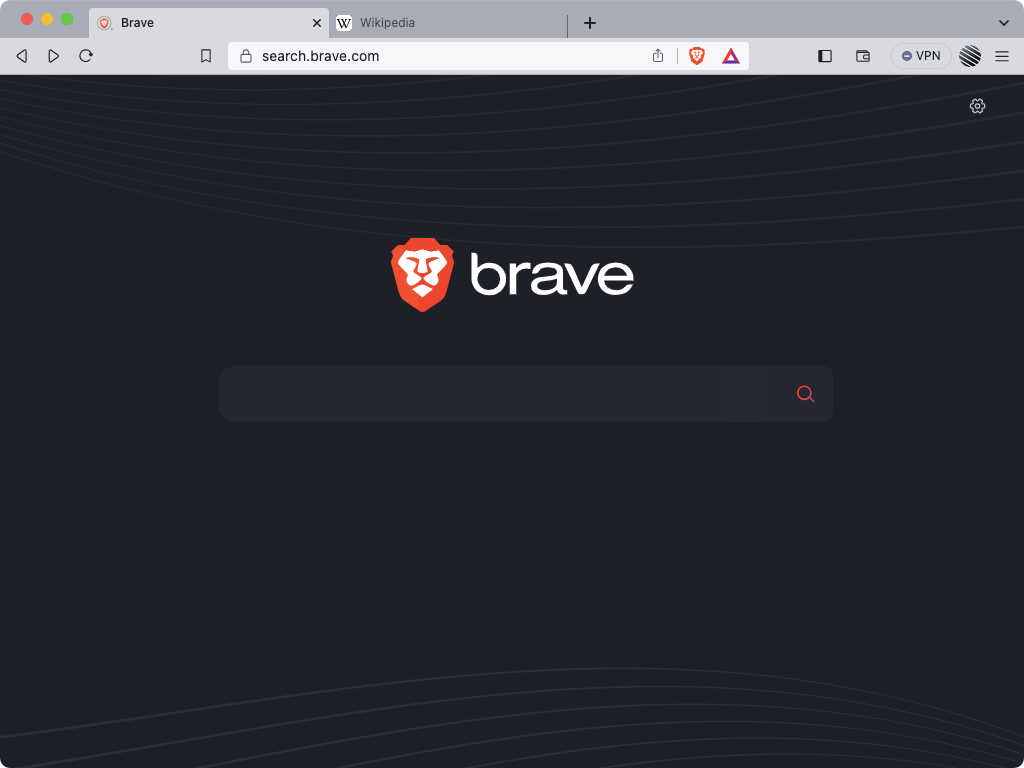
Accessing Brave Search is incredibly easy. It comes pre-installed as the default search engine in the Brave browser, but you don’t have to use it exclusively. You can simply enter search.brave.com into any browser of your choice—be it Chrome, Firefox, Safari, or any other—and start searching privately within seconds. This flexibility is especially useful when you’re trying out new options or when you can’t install new browsers on work devices.
Improving Performance
The performance metrics tell an interesting story. As Brave Search’s independent index grows through community contributions, speed and accuracy keep improving. Early reviews of Brave Search pointed out some gaps in results; however, the current version now delivers competitive performance that makes switching from mainstream search engines genuinely possible. The search results load quickly, and the relevance continues tightening as more users contribute anonymously through the Web Discovery Project.
Community Involvement and Transparency in Index Building
Building an independent search index from scratch sounds impossible—unless you have millions of people willing to help. That’s exactly what Brave pulled off with the Web Discovery Project, a crowdsourced initiative that turns everyday browsing into fuel for their search engine.
How the Web Discovery Project Works
Here’s the clever part: users who opt into the project through their Brave Browser anonymously share data about pages they visit and links they click. No personal identifiers, no tracking cookies, no profiles. Just raw signals about what content exists and how people interact with it. This anonymous contribution model helps Brave understand which websites matter and how they connect, feeding directly into their growing index.
Radical Transparency
The best privacy-first search engine candidates often talk about privacy, but Brave shows you exactly how they build their index without violating it. Their documentation openly explains what data gets collected (page URLs, link structures), what doesn’t (your identity, search history), and how it all works. This radical transparency stands in stark contrast to the black-box algorithms of tech giants who collect everything and explain nothing.
Escaping Third-Party Dependence
Community participation accelerates Brave’s escape from reliance on third-party APIs like Bing. Each anonymous contribution strengthens the index, improves result quality, and pushes Brave closer to complete independence. The Web Discovery Project proves that privacy and powerful search aren’t mutually exclusive—they just require a different approach, one where users become partners rather than products.
Why Consider Brave Search Today? A Trustworthy Alternative Worth Your Attention
The reasons for switching to this alternative to Google go beyond just talking about privacy. Brave Search offers practical advantages that make it the best search engine prioritizing privacy for everyday use. With Brave Search, your searches are truly private—no profiles created, no tracking based on your behavior, and no selling of data to advertisers or sharing with other parties.
Organizations like the Electronic Frontier Foundation have long documented how dominant search engines collect user data on a massive scale, creating detailed digital profiles that follow individuals across the internet.
Breaking the Pattern
Brave Search breaks this pattern while still delivering competitive performance. The independent index ensures that search results aren’t filtered through Google’s perspective of what you want to see based on your previous searches. Instead, you receive unbiased and relevant answers without compromising speed or accuracy.
Adding Modern Convenience
The AI-powered Ask Brave feature adds modern convenience to the search experience by providing summarized answers with sources instead of requiring you to click on multiple links. This feature saves time and effort, making it easier for users to find the information they need quickly.
Evolving Landscape of Private Search Engines
The landscape of private search engines has changed significantly, and Brave Search stands out by offering genuine privacy protections alongside innovative features like Goggles. With Goggles, users have the ability to customize the ranking of search results instead of simply accepting algorithmic decisions made behind closed doors.
This represents a fundamental shift in power dynamics: search engines serving users instead of advertisers.
A Refreshing Reset
For anyone who is tired of feeling like a product rather than a customer, Brave Search provides a refreshing reset. The technology works effectively, the privacy protections are genuine, and the future roadmap holds promise for even greater user empowerment through community-driven development.
In summary, switching to Brave Search offers practical benefits such as unbiased results, modern convenience with AI-powered features, and a shift in power dynamics where users are prioritized over advertisers. If you value privacy and want a search engine that respects your needs as a user, consider giving Brave Search a try.
Conclusion
Imagine a world where you can ask any question online without having to worry about your personal information being tracked or sold. That’s the vision behind Brave Search—a search engine that puts your privacy first without compromising on quality.
The internet was never meant to spy on us. But somewhere along the way, searching became synonymous with giving up our personal data. Brave Search is here to change that. With its unique combination of independence, innovation, and integrity, it challenges the norm and offers a different way to search.
Brave Search stands out with its no-tracking search approach, independent index, and community-driven features like Goggles. This proves that we can have both privacy and performance when it comes to online searching.
The shift towards a more private internet experience isn’t just a dream—it’s practical and necessary. Every time you use Brave Search, you’re taking a small step towards reclaiming your digital freedom from tech giants who have made invasive data collection the norm.
The technology is already here. The alternative is ready. Now, all we need to do is decide if we’re willing to take that first step.
Are you ready to search without being watched? Visit search.brave.com and discover what makes Brave Search the best privacy-first search engine out there. Remember, your questions deserve answers, not surveillance. Start exploring a new way of searching today—one where your privacy is non-negotiable.