

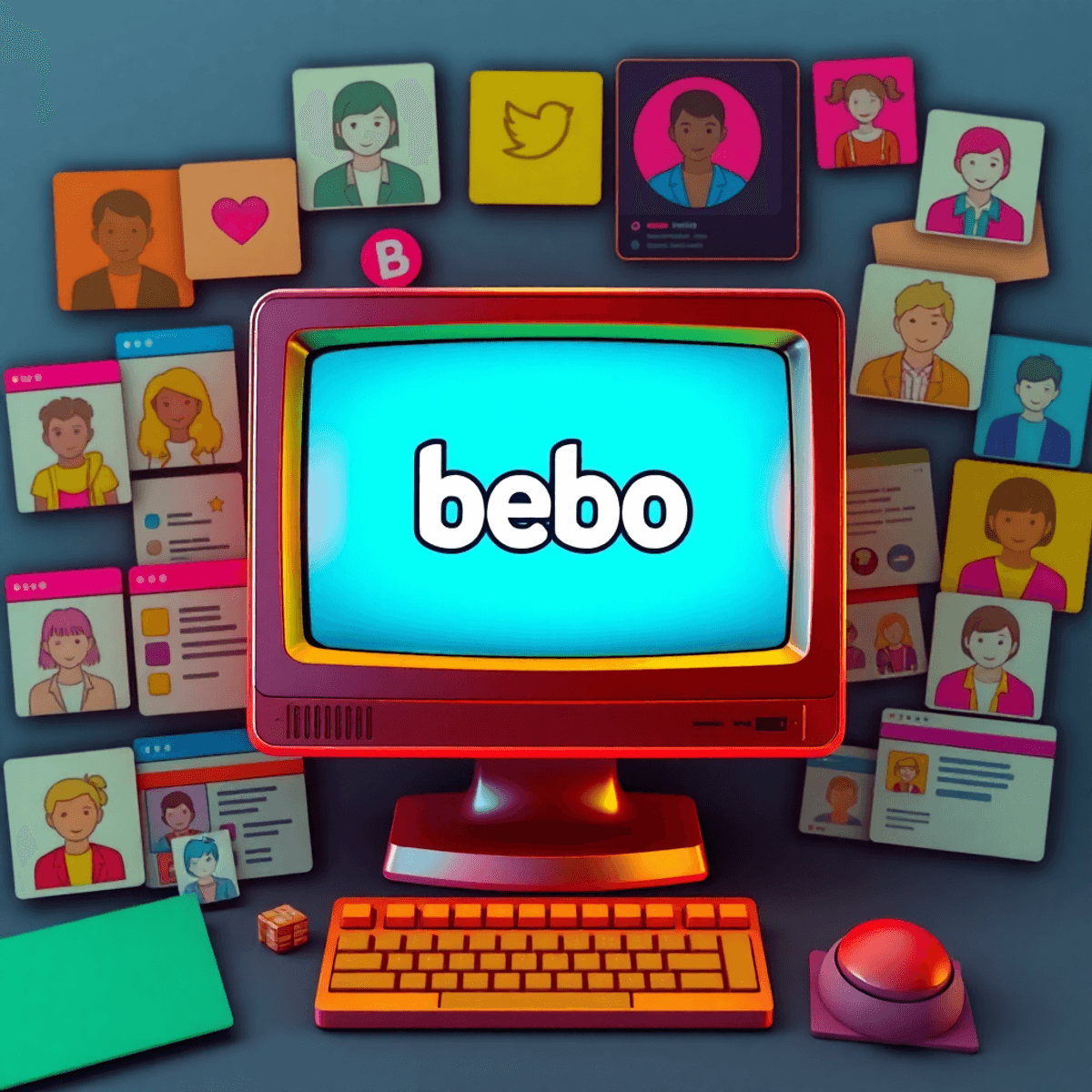
Remember Bebo? In the mid-2000s, this charming social network captured the hearts of millions with its friendly interface and creative customization options. At its peak, Bebo boasted over 40 million monthly users and became the UK’s most-visited social platform, outshining even MySpace.
The story of Bebo reads like a classic Silicon Valley tale – a meteoric rise followed by an unexpected fall. Founded in 2005 by Michael and Xochi Birch, Bebo offered users a digital playground where they could express themselves through blogs, photos, music, and quirky profile designs.
AOL’s $850 million acquisition in 2008 marked both Bebo’s highest valuation and the beginning of its decline. As Facebook and Twitter gained momentum, Bebo struggled to maintain its user base. Despite multiple revival attempts and ownership changes, including a brief transformation into a messaging app, Bebo couldn’t recapture its former glory.
This article looks back at Bebo, once one of the most popular and charming social media platforms that has now unfortunately become one of the many abandoned social media sites, as it faded into digital history. The narrative of Bebo also serves as a reminder of how quickly trends change in the digital world, reminiscent of the times before TikTok and Twitter when the old internet looked quite different.
The Early Days of Bebo
The Bebo social network was created in January 2005 by Michael and Xochi Birch, a husband-and-wife team who launched the platform from their home in San Francisco. The name “Bebo” stands for “Blog Early, Blog Often,” reflecting their vision of fostering a space for self-expression and online creativity. Bebo quickly gained popularity in the UK, Ireland, and other global pockets, becoming a vibrant digital playground for teenagers and young adults.
Customizable Profiles and Features
Bebo set itself apart with its highly customizable profile pages. Users had the ability to:
- Create personalized backgrounds using HTML and CSS
- Share photos in organized albums
- Write blog entries directly on their profiles
- Add music players and video content
- Design custom skins and layouts
- Create interactive polls and quizzes
- Draw on “whiteboards” to leave visual messages for friends
The platform’s user-friendly interface attracted teenagers and young adults who wanted to express themselves without needing advanced technical skills. A unique “love hearts” feature let users rank their top 16 friends, creating an engaging social dynamic that sparked friendly competition among users.
Rapid Growth in the UK and Ireland
By 2007, Bebo had exploded in popularity across the UK and Ireland, surpassing MySpace with over 10.7 million unique users. The platform captured 56% of the UK social networking market share, becoming particularly dominant among the 13-24 age demographic. Schools and universities embraced Bebo as their primary social network, with some institutions creating official profiles to connect with students.
The platform’s rapid growth in the UK stemmed from its emphasis on local content and community building. Bebo partnered with British media companies to create original web series like “KateModern,” which garnered millions of views and helped establish the platform as a pioneer in social entertainment.
AOL’s Acquisition and the Decline of Bebo
In March 2008, AOL made headlines with its $850 million acquisition of Bebo. The tech giant saw immense potential in the platform’s 40 million monthly active users and its dominant position in key markets like the UK and Ireland. AOL’s vision included transforming Bebo into a global social networking powerhouse by leveraging its existing media properties and advertising networks.
The acquisition marked Bebo’s peak – and the beginning of its downfall. While AOL focused on monetization strategies, Facebook and Twitter were rapidly innovating and expanding their user bases. Facebook’s clean interface and real-name policy attracted users seeking authentic connections, while Twitter carved out its niche in real-time information sharing.
Bebo faced several challenges during this time:
- User Migration: Existing users began abandoning the platform for Facebook’s growing network effect
- Innovation Gap: Bebo struggled to match the rapid feature releases of its competitors
- Market Position: The platform lost its unique identity as Facebook adopted similar features
- Technical Issues: Server problems and slow loading times frustrated remaining users
By 2010, Bebo’s monthly active users had plummeted to less than 12 million. AOL executives labeled the acquisition “one of the worst deals in the dotcom era.” The tech giant faced a difficult decision: either continue investing in a declining platform or cut its losses. In April 2010, AOL announced plans to either sell or shut down Bebo, marking a dramatic fall from grace for what was once the UK’s most popular social network.
Revival Attempts: The Bebo Comeback That Never Was
After AOL’s disastrous ownership, Criterion Capital Partners acquired Bebo’s assets in 2010 for a mere $2.5-10 million – a stark contrast to AOL’s $850 million purchase. The investment firm saw potential in reviving the once-beloved social network, bringing back original founders Michael and Xochi Birch as strategic advisers.
The 2011 relaunch introduced fresh features aimed at competing with Facebook’s growing dominance:
- A streamlined notification system mirroring Facebook’s design
- Enhanced photo-sharing capabilities
- Real-time chat features
- Integration with third-party apps and services
Despite these improvements, Bebo’s comeback faced significant hurdles. A devastating technical outage in January 2012 disrupted the platform during a crucial feature rollout, damaging user trust and engagement. The site struggled to differentiate itself in a market now dominated by established social media giants.
The numbers painted a grim picture. While Bebo once boasted 40 million active users during its peak, the revamped platform failed to attract even a fraction of its former user base. Young users, who had migrated to Facebook and Twitter, showed little interest in returning to their old digital hangout.
By May 2013, financial troubles caught up with Criterion Capital Partners, forcing them to file for bankruptcy protection. The failed revival attempt highlighted a harsh reality: nostalgia alone couldn’t sustain a social network in an increasingly competitive digital landscape. Michael Birch later repurchased Bebo for $1 million – less than 0.12% of its peak valuation – marking another chapter in the platform’s tumultuous journey.
Bebo Blab and the Final Closure
After several unsuccessful attempts to bring back Bebo, Michael Birch made another effort to reinvent the platform in 2015. This time, Bebo underwent a significant change and became a messaging app called Bebo Blab. The goal of this new version was to tap into the growing mobile messaging market, competing with popular apps like WhatsApp and Facebook Messenger.
Features of Bebo Blab
Bebo Blab introduced several features to attract users and stand out from its competitors:
- Real-time chat capabilities
- Group messaging functions
- Animated avatar customization
- Hashtag-based chat rooms
Despite these modern features, Bebo Blab struggled to gain popularity and attract a large user base. The app’s user engagement remained disappointingly low, leading to its shutdown just two years after launch.
Amazon Acquires Bebo
In 2019, something unexpected happened – Amazon acquired Bebo for $25 million through Twitch Interactive. This acquisition marked Amazon’s strategic move into the esports industry.
The plans that Amazon had in mind included:
- Using Bebo’s technology to develop streaming software
- Competing with established streaming platforms such as OBS
- Expanding Twitch’s capabilities in the esports domain
- Leveraging Bebo’s remaining user base for potential gaming initiatives
This acquisition signified a significant shift away from Bebo’s original identity as a social networking platform. Instead, under Amazon’s ownership, Bebo’s technology would serve a completely different purpose – powering streaming tools for gamers and content creators.
Another Relaunch Attempt
By early 2021, there were indications of yet another relaunch plan focused on individual user profiles. However, this attempt never moved beyond beta testing, and by May 2022, the platform quietly shut down.
The once-vibrant social network had completed its transformation from a beloved social platform to a technical asset in Amazon’s gaming arsenal. In this new era of digital interaction where platforms like Animaze are redefining how we engage online, the story of Bebo serves as a poignant reminder of the ever-changing landscape of social media and technology.
The Legacy of Bebo: Lessons Learned from a Defunct Social Network
Bebo’s journey from social media darling to digital footnote offers valuable insights into the volatile nature of internet platforms. The platform’s rise and fall demonstrates how even the most beloved social networks can become obsolete without continuous innovation and adaptation.
Three key lessons emerge from Bebo’s story:
- First-mover advantage isn’t enough: Despite its early success and loyal user base, Bebo couldn’t maintain its position when faced with more innovative competitors
- Acquisition timing matters: AOL’s $850 million purchase marked the beginning of Bebo’s decline, highlighting how corporate buyouts can sometimes stifle rather than fuel growth
- User experience trumps valuation: Bebo’s emphasis on customization and community created a uniquely personal space that users loved – proving that genuine connection matters more than monetary worth
The Bebo social network legacy lives on in the memories of millions who decorated their profiles, shared their lives, and connected through its colorful, chaotic charm. While Bebo has faded into internet history, it stands as a reminder that social media success depends on innovation, deep user insight, and the ability to adapt in an ever-evolving digital world.