
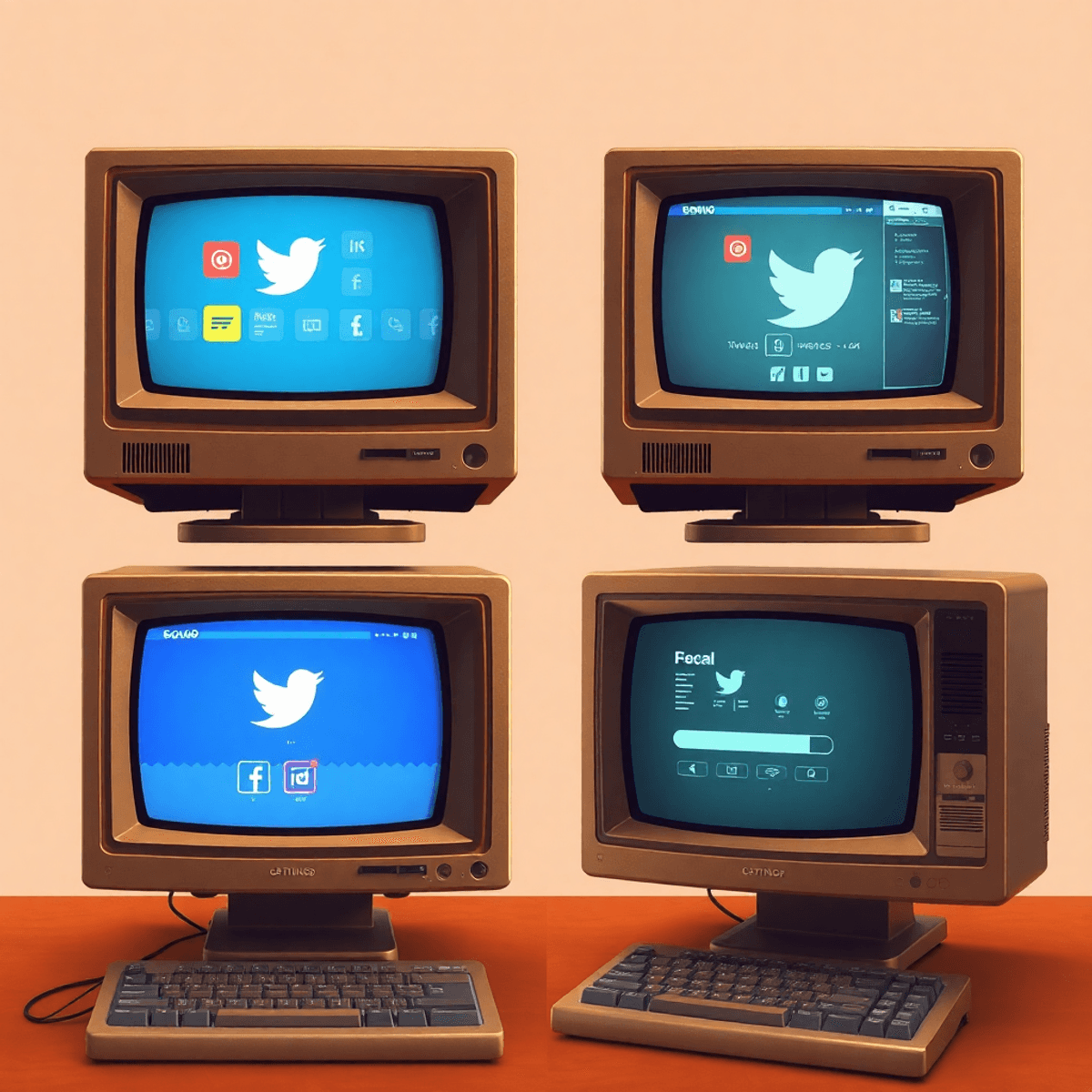
Remember that distinct screech-and-crackle of a dial-up modem? That sound marked the gateway to a digital world vastly different from today’s sleek, algorithm-driven landscape. The early 2000s internet wasn’t just a different technology – it was a different culture, a digital Wild West where creativity trumped convenience.
Picture this: Websites built by passionate amateurs, each page a unique expression of personality rather than a template. Bright colors, quirky fonts, and those beloved “Under Construction” GIFs created a chaotic yet charming visual tapestry. This was the internet before social media giants streamlined our online experience into uniform feeds.
The pre-social media web offered:
- Raw creativity – No templates, just pure HTML imagination
- Personal spaces – From GeoCities neighborhoods to LiveJournal diaries
- Organic discovery – Through webrings and human-curated directories
- Authentic connections – Built in chat rooms and message boards
As we navigate today’s polished digital highways, there’s value in remembering these dirt roads of the early web. They remind us of a time when the internet felt less like a product and more like a playground – where every click could lead to something wonderfully unexpected.
Let’s dust off our virtual time machine and revisit this fascinating era, where the foundations of our current online world were built one blinking cursor at a time.
The Look and Feel of Web 1.0
Remember those bright, clashing colors and the never-ending “Under Construction” GIFs? Web 1.0 wasn’t just different—it was like a digital Wild West where design rules were meant to be ignored.
The Visual Chaos We Loved
- Tiled backgrounds featuring stars, hearts, or that infamous purple marble pattern
- Blinking text in rainbow colors
- “Best viewed in Netscape Navigator” badges
- Animated email icons with flapping envelopes
- Dancing baby GIFs and flames around text
The humble visitor counter sat proudly at the bottom of every page, displaying pixelated numbers that proved someone had stumbled upon your corner of the web. These digital odometers became status symbols—even if we secretly refreshed the page ourselves to bump up the numbers.
Comic Sans reigned supreme, alongside its equally controversial cousins: Papyrus, Times New Roman, and the dreaded Courier New. Each font choice made a statement, whether the creator intended it or not. Professional websites used Times New Roman. Personal sites? Comic Sans all the way.
Design Elements That Defined the Era
<marquee>text scrolling endlessly across screens- Bright blue hyperlinks and purple visited links
- Guest books for visitors to sign
- “This site is optimized for 800×600 resolution” warnings
- Clipart. So much clipart
The aesthetic wasn’t polished, but it was authentic. Each site felt like walking into someone’s digital living room—complete with mismatched furniture and family photos hung slightly askew. Web rings connected these personal spaces like a neighborhood of quirky digital homes, each with its own distinct personality and charm.
How Web Design Worked Back Then
The backbone of early web design relied on table-based layouts, a creative workaround that turned HTML tables into makeshift design grids. Sites looked like digital quilts, with content neatly (or not so neatly) compartmentalized into cells and rows. These tables nested within tables created intricate layouts that would make modern web developers cringe.
There are even enthusiasts today who yearn for that nostalgic design style and are seeking ways to recreate it. You can find some examples of this desire here.
When Websites Were Personal
Remember when the internet felt like an endless neighborhood of quirky homes? Each website was a digital fingerprint, uniquely crafted by passionate individuals sharing their obsessions with the world.
The Rise of GeoCities and Themed Neighborhoods
GeoCities emerged as the ultimate digital playground, organizing these personal spaces into themed “neighborhoods.” A Harry Potter fan site might find its home in “Enchanted Forest,” while tech enthusiasts gathered in “Silicon Valley.” These neighborhoods created natural communities, connecting like-minded creators through shared interests.
Celebrating Raw Authenticity
The raw authenticity of these spaces was remarkable:
- A dedicated X-Files fan would spend countless hours building episode guides
- Pokémon enthusiasts crafted detailed Pokédex entries with hand-drawn artwork
- Music lovers shared meticulously curated MIDI collections
- Amateur astronomers posted nightly sky observations
LiveJournal: Where Personal Meets Social
LiveJournal became the perfect blend of personal website and social platform. Users customized their digital spaces with custom CSS, mood indicators, and friend groups. Each page reflected its owner’s personality – from minimalist layouts to elaborate designs featuring favorite anime characters.
Embracing Imperfections in DIY Web Culture
The magic of these early personal websites lay in their imperfections. Broken image links, perpetually “under construction” sections, and misaligned tables were badges of honor in the DIY web culture. Website owners learned HTML by viewing source code and experimenting, creating a genuine sense of accomplishment with each successful update.
Fan Sites: Passion Projects Without Monetization
Fan sites exemplified this era’s spirit. A teenage girl in Minnesota could run the internet’s most comprehensive resource for a niche TV show, earning respect purely through dedication and knowledge. These passion projects existed without monetization strategies or brand partnerships – they were labors of love, pure and simple.
Fostering Genuine Connections Online
These digital spaces fostered genuine connections. Guestbooks filled with thoughtful comments, webmasters exchanged banner links, and site updates became anticipated events. The web felt less like a product and more like a community art project, with each creator adding their unique voice to the digital landscape.
How We Socialized Before Social Media
Remember that satisfying ping when your friend logged into AIM? The late-night chat sessions felt like passing notes in a digital classroom, complete with carefully crafted away messages that doubled as cryptic poetry.
The early internet’s social landscape was a patchwork of intimate spaces. Forums became our virtual living rooms, where conversations unfolded at a deliciously slow pace. Each refresh brought new replies, and the anticipation of checking your favorite thread was half the fun. These weren’t just message boards—they were communities where friendships bloomed over shared obsessions with Star Trek fanfiction or obscure indie bands.
The Art of Forum Culture
- Custom signatures with pixel art and quote collections
- Elaborate user ranks based on post counts
- The unspoken rule of reading sticky posts before asking questions
- That one moderator who seemed to live on the forum 24/7
AIM (AOL Instant Messenger) was our real-time connection to friends—a precursor to today’s DMs. Your buddy list was a carefully curated collection of screen names, each one a tiny digital identity. The sound of a door creaking open meant someone was online, and the door slam meant they’d logged off—no ghosting possible.
Guestbooks were the original “like” button, but with more personality. Each entry was a miniature letter, complete with ASCII art borders and glittery graphics. Leaving your mark on someone’s personal site felt like signing a yearbook—equal parts excitement and social obligation. These guestbooks also served as platforms for creativity, allowing users to express themselves in unique ways.
The Unwritten Rules of Early Online Etiquette:
- Never type in ALL CAPS (unless you meant to shout)
- Sign your guestbook messages with your ICQ number
- Wait your turn in chat room conversations
- Respect the sacred art of the ~decorative divider~
These platforms might have loaded at dial-up speeds, but they created spaces where genuine connections flourished. Each forum thread, AIM chat, and guestbook entry was a pixel-perfect piece of our digital social tapestry.
The charm of forum culture also lay in its unique customs and practices.
Pre-Algorithm Internet Discovery
Remember when finding new websites felt like stumbling upon hidden treasure? Before algorithms decided what we should see next, the internet was a vast playground of user-curated discoveries.
Webrings: The Original Social Network
Picture this: you’re browsing a fan site dedicated to The X-Files, and at the bottom of the page sits a mysterious navigation bar. Click “Next” and you’re transported to another fan site, then another, forming a beautiful chain of themed websites. These were webrings – digital neighborhoods where like-minded creators linked their sites together in endless loops of shared interests.
The Art of the Blogroll
Every personal blog worth its HTML had a carefully curated list of recommended sites displayed proudly in the sidebar. These blogrolls served as personal endorsements, creating intricate webs of trust and discovery. Finding a new favorite blog meant gaining access to their entire network of recommended reads – a ripple effect of endless exploration.
Directory Diving
Yahoo! wasn’t always a search engine – it started as a hierarchical directory of hand-picked websites. Users would dive deep into nested categories:
- Entertainment > Games > Role-Playing > Fantasy > Dragon-themed
- Technology > Programming > Web Design > CSS > Tutorials
Each click revealed new layers of human-curated content, making the hunt for information feel like an adventure.
The Recommendation Economy
Link exchanges flourished as currency in this pre-algorithmic era. Webmasters traded visibility through:
- Guest book signatures with site URLs
- “Links” pages showcasing favorite destinations
- Forum signatures containing personal website addresses
The beauty of this system lay in its organic growth – every recommendation came from a real person who genuinely enjoyed the content enough to share it. Sites grew their audience through authentic connections rather than SEO optimization or paid promotion.
This era of discovery relied on human curiosity and genuine enthusiasm. Each new bookmark represented a personal connection, a trail blazed by fellow internet explorers who came before us. The web felt smaller yet somehow more vast, with every click holding the potential for serendipitous discovery.
What We’ve Lost (and Gained) with Algorithmic Influence on User Experience
The shift from human-curated to algorithm-driven content has reshaped our digital lives in profound ways. Today’s internet experience is smoother, faster, and undeniably more accessible – yet something intangible has slipped through our fingers.
Remember when finding content felt like a treasure hunt? Each discovery was earned through genuine exploration. Now, AI-powered recommendations serve us content with uncanny precision, but at the cost of serendipitous discoveries.
The Gains:
- Lightning-fast content discovery
- Personalized recommendations that actually work
- Broader reach for creators
- Streamlined user experiences
- Enhanced accessibility for newcomers
The Trade-offs:
- Digital echo chambers
- Loss of personal agency in content discovery
- Decreased ownership over our online spaces
- Homogenization of web design
- The death of “weird internet”
The algorithmic era has brought a peculiar paradox: we’re more connected yet less likely to stumble upon truly unexpected content. Where we once crafted unique digital spaces, we now rent pre-formatted squares on corporate platforms.
The pursuit of digital minimalism has become a conscious rebellion against algorithmic excess. Users seeking authentic connections are creating invite-only communities, newsletter-based networks, and simple tools that prioritize human curation over machine learning.
This tension between convenience and authenticity defines our current digital crossroads. As algorithms grow smarter, the value of human-driven discovery takes on new meaning. It’s crucial to remember that while algorithms can enhance user experience by providing personalized content, they can also lead to a loss of diverse perspectives and experiences online.
Conclusion
The early internet’s raw charm lives on in digital time capsules, waiting to be rediscovered. Tools like the Wayback Machine offer us glimpses into this bygone era – a world where creativity flowed unrestricted by engagement metrics and algorithmic recommendations.
While we can’t turn back the clock on internet evolution, we can learn from these digital artifacts. Take a moment to explore Archive.org’s treasure trove of preserved websites. Marvel at the quirky designs, read through unfiltered blog posts, and remember when the web felt like an endless frontier of possibility.
The internet’s past holds valuable lessons for its future. By understanding where we’ve been, we might just find inspiration for where we’re heading – perhaps even rediscovering some of that original magic along the way.
Ready for a nostalgic deep dive? Fire up the Wayback Machine and start exploring. Your next digital adventure awaits in the pixels of the past.