

Imagine the internet in 2004: no Twitter, no Instagram, and Facebook was still in its infancy. Yet millions of users were already gathering on a new platform that changed how we discovered and shared content online. What happened to Digg, the site that once ruled the early social web, is both a cautionary tale and a fascinating chapter in internet history.
Founded by tech entrepreneur Kevin Rose, Digg revolutionized the digital world by allowing users to curate content themselves. Its clever “digg” button—the predecessor of today’s widely used upvote—empowered ordinary internet users to elevate stories to viral status.
At its peak, Digg attracted nearly 200 million visitors each year, all eager to join this democratic movement of news sharing. Tech enthusiasts, political junkies, and meme lovers found their community within Digg’s lively ecosystem.
What happened to Digg isn’t just the story of a tech company that fell behind—it’s the story of a groundbreaking platform that revolutionized online content discovery. Digg pioneered the upvote, created a thriving community of early internet curators, and influenced the structure of platforms like Reddit. But at the height of its success, missteps in leadership and a poorly received redesign led to a mass user exodus and a steep decline.
The Rise of Digg
In 2004, the internet needed a new way to discover interesting content online. That’s when Digg.com came into the picture, introducing a game-changing feature called the “digg” button.
How Digg Worked
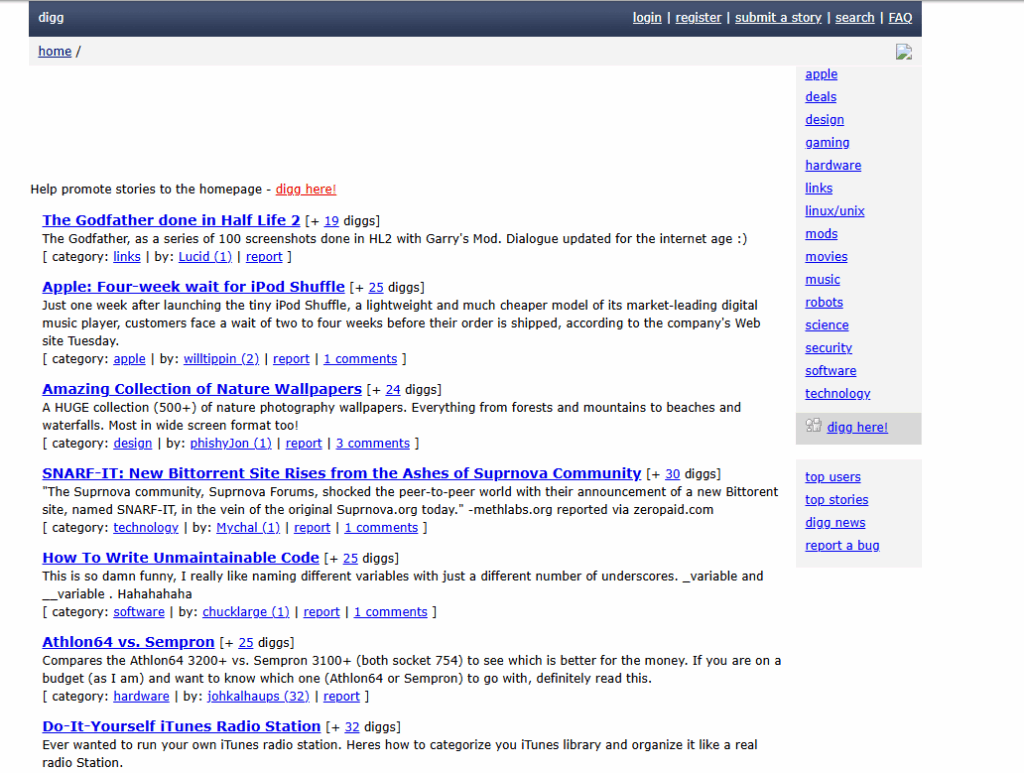
Digg had a unique approach to curating content. Here’s how it worked:
- Users could submit links to anything they found fascinating, whether it was breaking tech news or an unusual YouTube video.
- Each submission’s popularity was determined by the number of “diggs” it received, creating a fair system where the best content rose to the top.
- The most popular submissions would then be featured on Digg’s front page, attracting even more attention and traffic.
This simple yet effective system became a breeding ground for fresh and authentic content.
What Made Digg Stand Out
Digg had a special ability to showcase trending topics before they became mainstream. Some of the highlights included:
- Viral videos that would later dominate television screens
- Exclusive tech scoops that got Silicon Valley buzzing
- Political scandals gaining traction
- Early memes that shaped internet culture
The platform also had its own set of influential users who became digital tastemakers. One such user, MrBabyMan, gained near-celebrity status for consistently surfacing engaging content.
The Impact of Digg
At its peak in 2009, Digg attracted an impressive 200 million monthly visitors. Its impact extended beyond just website traffic – it also influenced how news stories were consumed and shared.
The power of community voting on Digg meant that users didn’t merely passively consume news; they actively shaped it. Stories could go from being obscure to viral sensations within hours, thanks to the platform’s dynamic ecosystem.
The Wild West Spirit of Web 2.0
Digg perfectly embodied the spirit of Web 2.0 – an era where anyone with a keen eye for content could become an influential curator.
The interface was refreshingly straightforward:
Submit link → Community votes → Best content rises → Front page glory
This elegant system sparked intense competition among users who sought out undiscovered gems and strived for the coveted “front page of Digg” status.
The “Digg Effect”
Achieving front-page placement on Digg became highly sought after, as it could lead to massive traffic spikes that overwhelmed smaller websites. This phenomenon came to be known as the “Digg effect.”
However, with great power comes great responsibility. The influence that platforms like Digg wielded over public opinion and news dissemination raised concerns about how AI puts elections at risk, necessitating discussions around needed safeguards in our increasingly digital world.
Digg’s Redesign Disaster
The summer of 2010 marked a turning point in Digg’s history with the launch of Digg v4 – a redesign that would become a textbook example of how not to update a social platform.
The new interface stripped away beloved features that made Digg unique:
- The “bury” button vanished
- The upcoming stories section disappeared
- User profiles lost customization options
- RSS feeds broke completely
But the most devastating change? Digg v4 prioritized content from major publishers over user submissions. The front page transformed overnight from user-curated gold into what felt like an automated PR feed. One user famously commented: “It’s like replacing a democracy with sponsored content.”
The numbers tell a brutal story. Within 24 hours of the v4 launch:
- Traffic plummeted by 50%
- 250,000+ users fled to Reddit
- Digg’s valuation dropped from $164M to under $1M
Reddit seized this moment brilliantly, welcoming Digg refugees with open arms and a familiar interface. They even added an “import from Digg” feature, making the transition painless for frustrated users.
Kevin Rose, Digg’s founder, later admitted in a blog post:
“We tried to do too much at once. We thought we knew better than our community, and we paid the price.”
The v4 disaster triggered a chain reaction:
- Mass layoffs hit the company
- Kevin Rose resigned
- Advertisers pulled their campaigns
- The site’s core community fractured beyond repair
What makes this redesign particularly fascinating is how it violated basic principles of community management. Instead of gradual changes with user feedback, Digg forced a complete overhaul that ignored years of established user behavior and community dynamics.
The “Digg Effect” – once a term for the massive traffic surge that followed a front-page feature – became synonymous with spectacular tech platform failure.
The Legacy of Digg
Digg’s influence can be seen in every upvote, share button, and viral headline on the internet today. It didn’t just collect news articles – it changed the way we find and share content online.
Digg: The Beta Test for Digital Democracy
Think of Digg as the beta test for digital democracy. Its “digging” system proved that crowds could curate better content than traditional gatekeepers. This radical idea spawned an entire ecosystem of social news sites and fundamentally changed how information spreads online.
How Digg Influenced Reddit
The platform’s influence runs deep in Reddit’s architecture:
- The upvote/downvote mechanism
- Front page algorithms driven by user votes
- Community-powered content moderation
- The emphasis on early discovery of trending content
The Cultural Impact of Digg
Beyond its technical features, Digg also shaped the culture of content sharing. It established the following principles:
“Going viral isn’t an accident – it’s a science of timing, targeting, and tribal knowledge”
- Kevin Rose, Digg co-founder
Key Innovations That Changed the Web
Some of the key innovations introduced by Digg that had a lasting impact on the web include:
- Real-time content popularity tracking
- User reputation systems
- Social sharing metrics
- Democratic content discovery
The Lessons from Digg’s Power Users
The platform’s power users – the infamous “Digg Patriots” – demonstrated both the potential and pitfalls of crowd-sourced news. Their ability to push stories to the front page highlighted how viral democracy could be both empowering and manipulative.
Digg’s Lasting Impact on the Social Web
Digg’s influence can still be seen across the social web today. Every time you upvote a post, share breaking news, or watch a video go viral, you’re participating in the ecosystem that Digg helped create. Although the platform may no longer be at the top, its legacy lives on through viral content and social news platforms.
The Modern Reboot and Its Challenges
Betaworks’ 2012 acquisition of Digg for $500,000 marked a stark contrast to the platform’s previous $164 million valuation. The new owners attempted to breathe life into the brand through a complete redesign, shifting from user-driven content to an editorially curated approach backed by social media analytics.
The revamped Digg achieved modest success, growing from 1.5 million to 8 million monthly visitors. Yet these numbers pale in comparison to its glory days of 200 million unique visitors. The new iteration faces several key challenges:
- Identity Crisis: The current Digg resembles a traditional news site more than the community-driven platform that once defined internet culture
- Loss of Community: Former power users and early adopters have established deep roots in other platforms, particularly Reddit
- Market Saturation: Social news aggregation now exists across numerous platforms, from Twitter to LinkedIn
The 2025 reacquisition by Kevin Rose and Alexis Ohanian signals another attempt at resurrection. Their vision includes AI moderation tools and mobile-first design, but the landscape has changed dramatically. Modern users have different expectations, shaped by TikTok-style instant gratification and algorithmic content delivery.
The platform’s struggle mirrors a broader truth about internet communities – once users migrate elsewhere, rebuilding that sense of belonging becomes nearly impossible, even with cutting-edge technology and familiar faces at the helm.
Conclusion
What happened to Digg is a classic Silicon Valley saga—an innovator that introduced viral news aggregation and upvoting, only to watch its empire crumble after alienating its user base. Digg’s fall wasn’t due to lack of innovation, but a failure to understand and respect the community it helped build. Its DNA lives on in Reddit, Twitter trends, and every platform that thrives on user-powered discovery.
The platform’s rapid rise and dramatic fall serve as a clear reminder: being innovative doesn’t guarantee long-term success in the digital age. Success depends on finding the right balance between providing a great user experience and achieving business growth.
What happened to Digg remains one of the internet’s most iconic cautionary tales. Whether you were part of the great Digg exodus of 2010 or inherited its legacy through Reddit and beyond, its story continues to shape how we engage with news online. Drop a comment with your favorite Digg memory—or your thoughts on what the next era of social news might look like.
The internet has a long memory – and Digg’s influence can still be seen in today’s digital world.