

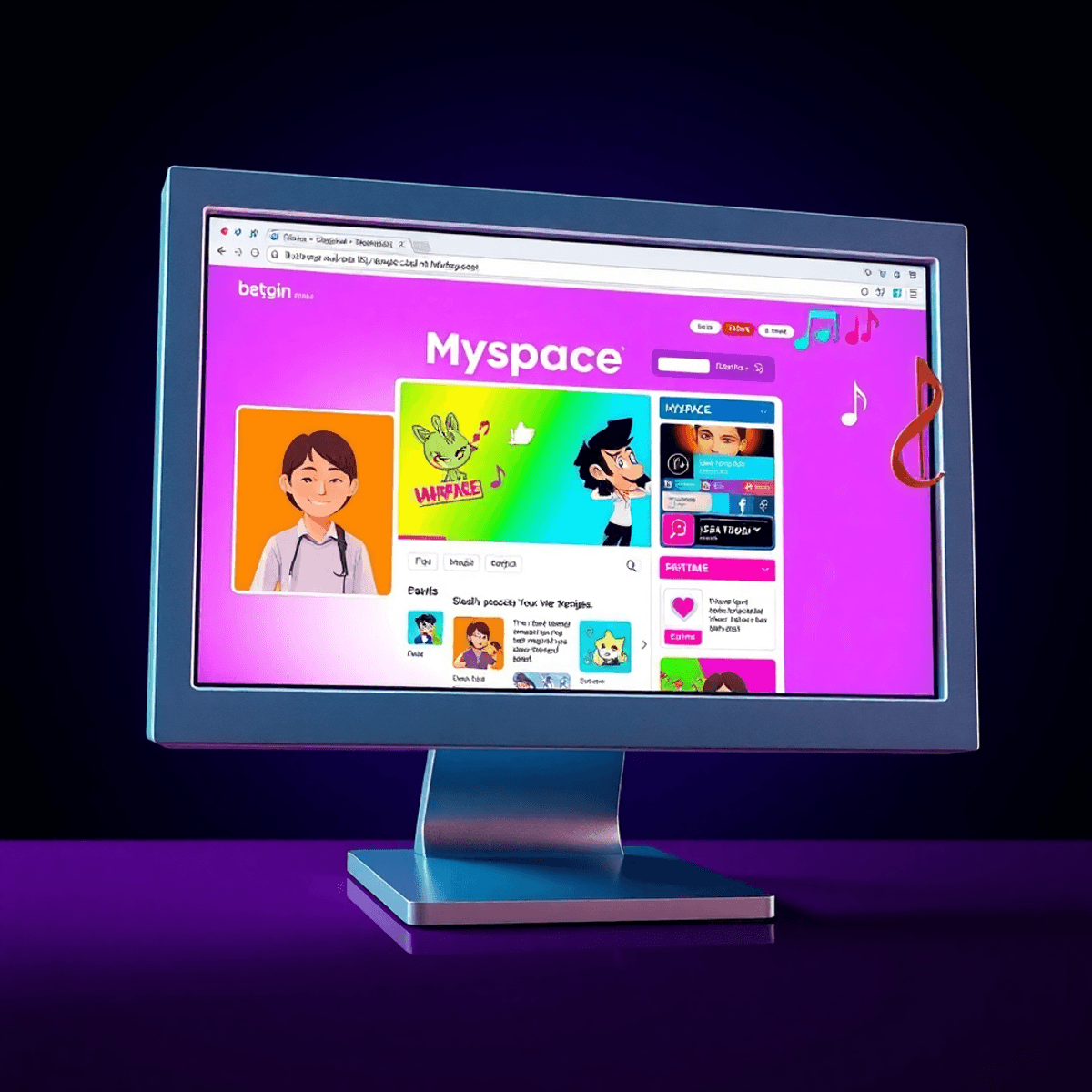
What happened to MySpace? Once the dominant force in social media, MySpace was a game-changer in how we shaped our online identities. Launched in 2003, it wasn’t just another website—it was the place where millions of users learned to customize profiles, share music, and express themselves in a way the internet had never seen before.
Imagine this: a platform that allowed you to be both your true self and your ideal self, complete with flashy GIFs and music playing in the background. MySpace empowered us to take control of our online presence, giving us the ability to customize our profiles with HTML code and share our lives through carefully selected photos and status updates.
However, much like a bright shooting star, MySpace’s innovative approach to self-expression ultimately led to its downfall. The very features that made it unique—those endlessly customizable profiles and creative options—became its weakness when faced with more polished and user-friendly competitors.
The story of what happened to MySpace is more than a tale of a social network that lost its crown. It’s about a digital pioneer that redefined what online self-expression could look like—messy, colorful, deeply personal, and wildly influential. MySpace wasn’t just a platform; it was a cultural movement that left a lasting imprint on internet history.
The Peak of MySpace
In 2006, MySpace was the undisputed champion of social media, boasting over 100 million users and even surpassing Google as the most visited website in the United States. It became a virtual playground where people could express themselves freely.
Customization: The Key to MySpace’s Success
What made MySpace so appealing was its groundbreaking customization options. Users had the power to use HTML code to create unique profiles that reflected their personalities. Some opted for simple designs while others went all out with flashy and sometimes overwhelming displays of creativity. And let’s not forget about the profile song, which set the mood for each user’s page—whether it was an emo anthem or a pop classic.
Social Dynamics: The Impact of “Top 8”
One of the defining features of MySpace was the “Top 8” section, where users could showcase their closest friends. This created an interesting social hierarchy that often spilled over into real-life relationships. People would have conversations about their rankings and make decisions based on who was placed higher or lower. It became a delicate dance of managing friendships and navigating social dynamics.
Shaping Internet Culture: MySpace’s Unique Features
MySpace introduced several features that shaped a distinct internet culture:
- Profile Songs: Your musical choice became your digital first impression
- Custom Backgrounds: From glitter graphics to moody black themes
- HTML Freedom: Users learned basic coding just to stand out
- Blog Section: A personal diary meets public broadcast
- Custom Cursors: Because why scroll with a boring arrow?
These elements not only allowed users to personalize their profiles but also fostered creativity and self-expression within the online community.
Launching Careers: MySpace’s Impact on Music
The platform also played a significant role in promoting emerging artists. Bands like Arctic Monkeys and Lily Allen gained popularity through MySpace’s music-friendly environment, where independent musicians could directly connect with potential fans. This democratization of music promotion opened doors for many talented individuals who may not have had access to traditional avenues.
Crafting Online Identities: The Art of Profile Creation
During its peak era, MySpace was where many people first began shaping their online identities. Users dedicated hours to perfecting their profiles—choosing the right photos, curating interests, and showcasing hobbies. This process of digital self-curation became an art form in itself, with each profile serving as a unique representation of its creator’s personality and tastes.
Influencing Digital Norms: MySpace’s Legacy
The impact of MySpace extended beyond individual expression; it also influenced broader societal norms surrounding digital friendship, online communication, and personal branding. The practices established on this platform laid the groundwork for future social media platforms, shaping how we interact and present ourselves in the online world today.
The Shift in Online Identity
Remember when the internet felt like a masquerade ball, where usernames like DragonSlayer99 and PunkRockPrincess ruled the digital landscape? MySpace changed all that. It ushered in an era where our online personas became extensions of our real-world selves.
MySpace: The Game Changer
MySpace profiles transformed into digital mirrors reflecting users’ personalities. Each profile became a carefully curated showcase of interests, music tastes, and aesthetic preferences. The platform’s HTML customization options let users craft their digital identity down to the smallest detail – from glitter-covered backgrounds to carefully chosen cursor effects.
This shift marked the birth of personal branding as we know it today. Users learned to:
- Select profile photos that represented their desired image
- Craft “About Me” sections that told their story
- Choose profile songs that expressed their personality
- Create visual themes that matched their personal style
A Testing Ground for Self-Presentation
The platform became a testing ground for self-presentation. Artists used their profiles as portfolios, bands created fan engagement spaces, and everyday users experimented with different ways to present themselves to the world. This experimentation laid the groundwork for influencer culture and the concept of maintaining a cohesive online presence.
The Power of Creative Freedom
MySpace’s creative freedom sparked a revolution in digital self-expression. Users discovered they could be both authentic and aspirational in their online presence. The platform’s customization tools empowered people to craft digital spaces that truly felt like their own – a practice that would influence social media design for years to come.
Remember those late nights spent perfecting your profile layout? That wasn’t just teenage angst – it was the beginning of understanding how to present yourself in a digital world.
The Downfall of MySpace
MySpace’s decline is a classic tale of too much, too fast. By 2008, what started as an innovative platform had turned into a confusing digital mess that left users feeling overwhelmed and frustrated.
The Beginning of MySpace’s Identity Crisis
News Corporation’s $580 million acquisition in 2005 marked the beginning of MySpace’s identity crisis. The platform’s new corporate owners pushed for aggressive monetization, filling pages with flashy advertisements that slowed loading times and disrupted user experience. Remember those auto-playing video ads that made your computer fan whir like a jet engine?
The Chaotic Interface
The interface became increasingly chaotic:
- Profile pages took ages to load
- Spam accounts ran rampant
- Security issues multiplied
- Navigation became needlessly complex
Enter Facebook
While MySpace struggled with its own complexity, Facebook offered a clean, organized, and refreshingly simple alternative that appealed to users tired of dodging glittery GIFs and auto-playing music. The exodus began slowly, then picked up speed: college students led the way, followed by their younger siblings, then their parents.
MySpace’s Attempts at Reinvention
MySpace’s attempts at reinvention through multiple redesigns only confused its remaining loyal users. Each update seemed to strip away another layer of the creative freedom that had made the platform special. The site lost users—dropping from 95 million to 63 million in just one month during 2011.
The Futile Attempts to Stay Relevant
The platform’s desperate attempts to stay relevant through redesigns and repositioning proved useless. What was once the internet’s favorite hangout spot had become a warning story of how corporate mismanagement and failure to adapt can topple even the mightiest of social media giants.
The Current State of MySpace
MySpace today feels like a walk through a digital museum. The once-popular social network now operates as a niche music platform, far from its glory days. In 2019, the site faced a server migration disaster that wiped out millions of songs, photos, and videos uploaded before 2016—an estimated 50 million tracks from 14 million artists disappeared overnight.
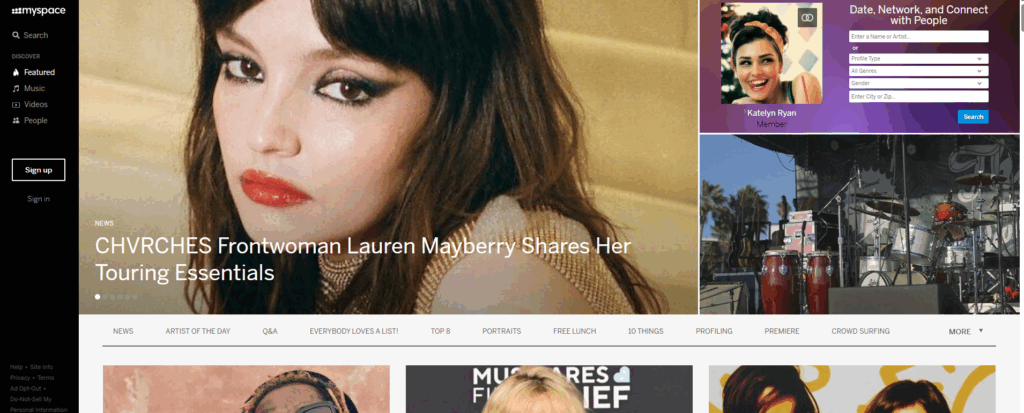
The current MySpace interface has a sleek, modern design focused on music discovery and streaming. However, this redesign sacrificed the personalization that made MySpace unique. The glittering backgrounds, auto-playing profile songs, and custom HTML that defined the original experience are all gone.
Today’s MySpace
MySpace now exists in two forms:
- A quiet music platform with only a small fraction of its original user base
- A vast network of abandoned profiles preserved through web archives
Visiting these archived profiles is like exploring a digital Pompeii—frozen moments from 2006 still showcase carefully curated Top 8 friends, thoughtfully chosen profile songs, and status updates about homework and weekend plans. These digital time capsules capture a unique moment in internet history when millions of users first discovered how to express themselves online.
The shift from being a social media giant to becoming a music-focused site reflects larger changes in how we connect and share online. While new users can still create accounts, most activity now comes from nostalgic visitors looking through cached versions of their teenage digital lives.
The Lasting Impact of MySpace
MySpace’s influence can be seen in every social media platform we use today. Those early experiments in expressing ourselves online—like choosing our favorite songs for our profiles and designing unique layouts with HTML—set the stage for how we showcase our personalities on the internet.
How MySpace Shaped Online Self-Expression
MySpace taught us the art of digital storytelling through:
- Personal branding before it became a popular term
- Visual customization that reflected our identities
- Sharing music to create emotional connections
- Building friend networks that influenced social dynamics
Beyond Features: MySpace’s Cultural Shift
The impact of MySpace goes beyond just its features. It brought about a cultural change in how we perceive online identity. It made us comfortable with sharing our lives on the internet, transforming social media from something new and exciting into a natural part of who we are.
The Legacy of MySpace in Today’s Platforms
Understanding what happened to MySpace helps us appreciate how today’s social platforms evolved. Though modern networks may seem sleeker and more structured, they all borrow from MySpace’s original blueprint—a digital space where personality, creativity, and chaos coexisted. MySpace didn’t just connect people—it inspired them to build identities online.
The next time you curate your Instagram feed or personalize your Twitter header, remember: you’re continuing the legacy that began with a friend named Tom and an empty profile waiting to be filled with your unique personality.