

What if an entire novel could be written one sentence at a time by dozens of strangers? That’s exactly what happens in a collaborative fiction forums — digital spaces where creativity flows sentence by sentence. In these unique communities, users don’t just write together—they build entire worlds, twisting plots, and surprising moments, all emerging from a shared chain of ideas. It’s storytelling as a game, an experiment, and an art form rolled into one.
Deep in the corners of the internet, a fascinating experiment in collective storytelling unfolds daily. Writers gather in collaborative fiction forums where each participant adds just one sentence to an evolving narrative. No outlines. No predetermined endings. Just pure creative spontaneity.
These digital storytelling spaces turn traditional novel writing on its head. Rather than a single author carefully crafting plot arcs and character development, these stories emerge organically through a cascade of contributions from minds across the globe. One writer might introduce a mysterious stranger, another adds an unexpected plot twist, while a third reveals a shocking secret – each building upon the previous sentence in unexpected ways.
This article delves into these unique online communities where chaos and creativity collide. We’ll explore the inner workings of one-sentence story sites, examine the dynamic social interactions that fuel them, and uncover how these experimental spaces are reshaping collaborative fiction in the digital age. Additionally, we will provide a beginner’s guide to finding weird but welcoming internet groups, which can serve as a helpful resource for those interested in exploring these unconventional storytelling platforms further.
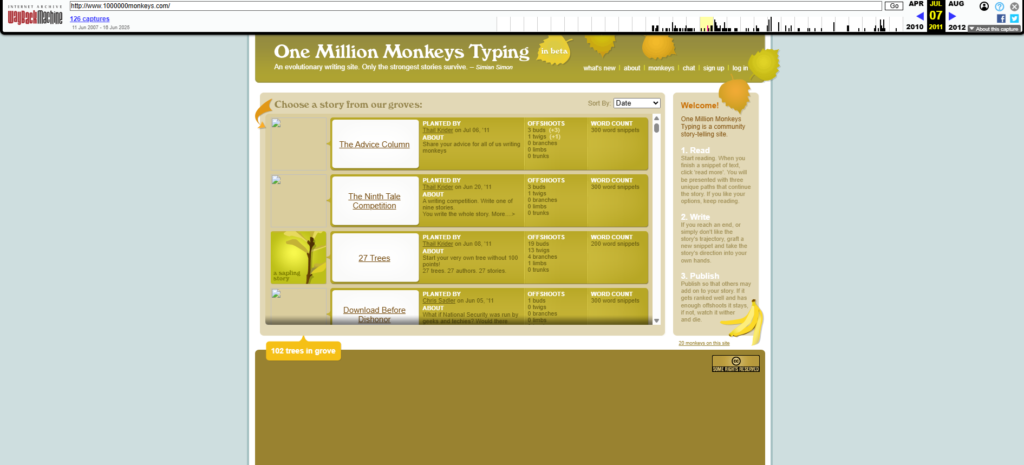
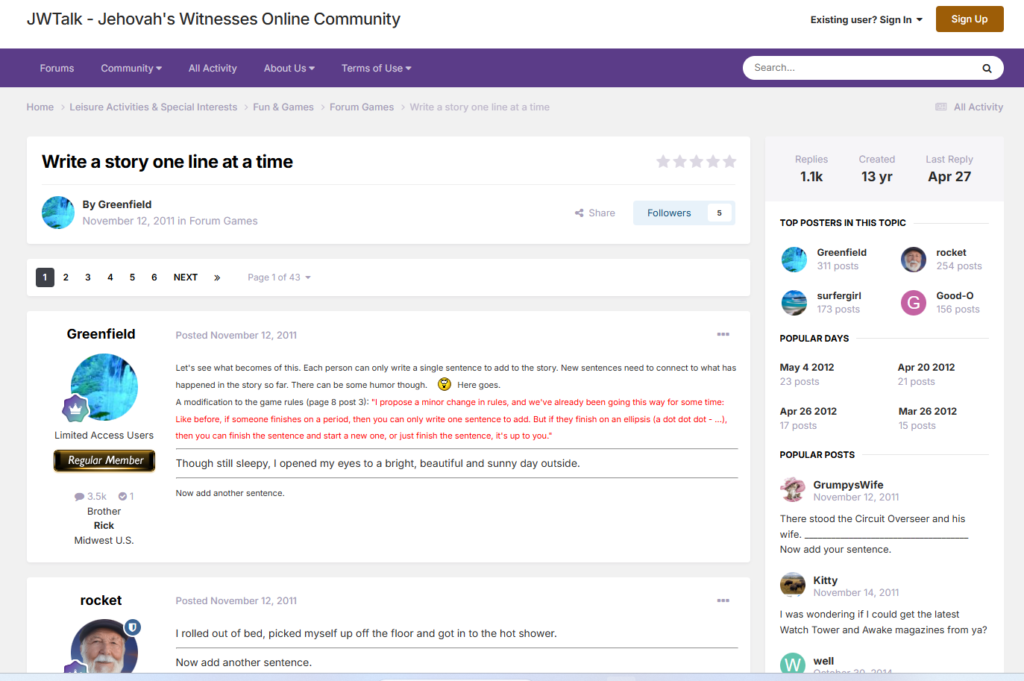
This is exactly what websites like One Million Monkeys or JWT One Sentence Story Thread were doing.
The Evolution of Collaborative Fiction Forums
The roots of collaborative online storytelling trace back to the early 1990s bulletin board systems (BBS), where users first experimented with chain stories through text-based interfaces. These primitive digital spaces sparked a revolution in group narrative creation, transforming traditional round-robin storytelling into a dynamic online experience.
The Birth of Online Collaborative Fiction
The rise of web forums in the late 1990s birthed dedicated spaces for collective fiction writing. Notable examples include StoryMash and FoldingStory, platforms that pioneered the one-sentence contribution format. These sites introduced structured systems for story progression, allowing users to vote on contributions and branch narratives in multiple directions.
Early Experiments in Collaborative Storytelling
Early internet writing experiments laid the groundwork for today’s collaborative fiction landscape:
- Chain Email Stories (1995-2000) – Passed between small groups of writers
- LiveJournal RPG Communities (2001-2007) – Character-driven collaborative narratives
- Fiction.net Forums (2003) – First major platform dedicated to sentence-by-sentence story building
- WriteWith (2008) – Introduced real-time collaborative editing features
Influence of Gaming on Collaborative Fiction
The gaming world significantly influenced these platforms through:
- Text-based MUDs (Multi-User Dungeons)
- Forum-based roleplaying games
- Interactive fiction experiments
Modern Iterations of Collaborative Fiction
Modern platforms like Storium and RoleGate have refined these concepts, incorporating elements from both traditional writing forums and gaming communities to create immersive collaborative storytelling experiences.
How One-Sentence Story Sites Work
One-sentence story sites function like a digital writing room where each participant holds a piece of the narrative puzzle. Users take turns adding their contributions to an ongoing story thread, with each new sentence building on the previous ones and taking the plot in unexpected directions.
The Mechanics
The mechanics are quite simple:
- Users can either join an existing story thread or start a new one
- Each participant is allowed to add only one sentence at a time
- Writers must wait for others to contribute before they can add another sentence
- The story develops naturally without any predetermined endings
Real-Time Collaboration
These platforms operate in real-time, creating a dynamic similar to improvisational theater. Writers respond to plot developments as they happen, crafting responses that shape characters and move the story forward on the spot.
Guidelines for Narrative Cohesion
To ensure that the story remains cohesive, most sites have basic guidelines in place:
- New sentences must logically connect to the previous content
- Character actions should remain consistent
- Major plot twists require subtle setup
- Explicit content warnings for mature themes
- No intentional disruption of established storylines
Encouraging Quality Contributions
Many platforms have voting systems where readers can highlight particularly creative or well-written sentences. This gamification element encourages high-quality contributions while promoting healthy competition among writers.
Catching Up with the Story
The interface usually shows the entire story thread, with the latest additions highlighted at the top. This format allows new participants to quickly get up to speed with the narrative before adding their own creative touch to the collective masterpiece.
The Impact of One-Sentence Story Platforms on Writing Skills
Interestingly, engaging with these one-sentence story platforms can significantly enhance a writer’s skills. According to research published in a scientific journal, such collaborative storytelling experiences can improve narrative coherence, character development understanding, and overall writing proficiency.
The Creative Dynamics Behind Collaborative Fiction
The magic of collaborative fiction forums lies in their unique creative dynamics. Each sentence added ripples through the story, creating unexpected character developments and plot twists that no single author could have planned.
Picture a story where one user introduces a mysterious locked door, another describes strange sounds emanating from behind it, and a third reveals an ancient civilization’s artifacts scattered inside. These spontaneous contributions create rich, layered narratives that branch in fascinating directions.
Character development takes particularly interesting turns in these forums. A protagonist might start as a simple baker, but through various users’ contributions, evolve into:
- A secret supernatural being
- The last keeper of an ancient recipe
- An unwitting hero thrust into an interdimensional conflict
The beauty of this chaos stands in stark contrast to traditional single-author narratives. While conventional novels follow carefully plotted story arcs, collaborative fiction embraces the unexpected. A lighthearted romance might suddenly incorporate elements of cosmic horror, or a serious drama might take a surprising turn into magical realism.
These narrative mutations reflect the diverse perspectives and creative instincts of the community. Each contributor brings their unique worldview and storytelling style, creating a tapestry of ideas that would be impossible to replicate in traditional fiction writing.
The Social and Cultural Impact of Writing Novels One Sentence at a Time
These user-created novels represent more than just experimental storytelling – they’ve sparked vibrant digital communities where creativity and connection intertwine. Writers forge lasting friendships through their shared narrative adventures, celebrating each other’s imaginative contributions and building relationships that extend beyond the story threads.
The social dynamics of these platforms reveal fascinating patterns of interaction:
- Instant feedback loops create a supportive environment where participants encourage each other’s creative risks
- Shared vocabulary and inside jokes emerge organically, strengthening community bonds
- Mentorship relationships develop naturally as experienced writers guide newcomers
Research into participant motivations shows these internet writing experiments fulfill deep psychological and social needs. Many users report feeling a profound sense of belonging through collaborative storytelling. The act of building worlds together creates strong social ties, while the creative freedom allows for authentic self-expression in a judgment-free space.
The cultural impact extends into how modern readers and writers view authorship. These platforms challenge traditional notions of singular creative genius, showcasing the power of collective imagination. As one participant noted: “Here, everyone is both reader and writer, critic and creator. The boundaries blur in the most beautiful ways.”
The democratization of storytelling through these forums has influenced broader conversations about creativity, ownership, and the future of digital literature. Writers experiment with form and genre free from commercial pressures, leading to innovative narrative approaches that wouldn’t emerge in traditional publishing.
Noteworthy Collaborative Fiction Communities and Projects
Several thriving online platforms have emerged as hubs for sentence-by-sentence storytelling, each with its unique approach to collaborative fiction:
1. Folding Story
stands out as a pioneering platform where writers contribute one fold (sentence) at a time. The site has produced remarkable works, including “The Clock Strikes Midnight” – a mystery novel crafted by 157 contributors over six months.
2. Ficly
(formerly Ficlets) gained recognition for its micro-fiction approach, limiting each contribution to 1024 characters. The platform’s most celebrated work, “The Red Door,” grew from a single sentence into a 300-page supernatural thriller through contributions from over 200 writers.
3. Popular Reddit communities
have embraced this creative format:
- r/OneLiners showcases daily story threads where thousands of users build narratives
- r/CollaborativeWriting hosts themed writing events for group storytelling
- r/WritingPrompts occasionally features “chain story” threads that attract massive participation
4. Story Seedlings
a newer platform launched in 2021, implements AI assistance to help maintain narrative coherence while preserving the spontaneous nature of collaborative writing. Their flagship project “Echoes of Tomorrow” combines human creativity with machine learning to guide story progression without restricting individual contributions.
These communities demonstrate the growing appeal of collaborative storytelling, with some projects attracting tens of thousands of contributions across multiple languages and genres.
Challenges Faced by One-Sentence Collaborative Storytelling
Creating stories one sentence at a time brings unique creative hurdles. Characters might suddenly change personalities as different writers interpret them differently. Plot threads can dangle unresolved when contributors forget or ignore earlier story elements.
The “yes, and” nature of collaborative storytelling can lead stories into bizarre territory. A grounded romance might unexpectedly veer into sci-fi territory when a writer introduces aliens. These genre shifts can fracture narrative cohesion.
Common pitfalls include:
- Pacing issues – Some writers rush major plot points while others dwell on minor details
- Conflicting writing styles – Mixing formal and casual tones creates jarring transitions
- Competing character arcs – Multiple writers pushing different character development directions
- Continuity errors – Details about settings, timelines, or character backgrounds becoming inconsistent. Maintaining continuity in fictional writing is crucial yet challenging in such scenarios.
Writers also face the challenge of advancing the plot meaningfully in a single sentence while staying true to the established story. The constraints of one-sentence contributions can make it difficult to develop complex themes or emotional depth organically. Moreover, as highlighted in a recent discussion on Reddit, differing opinions on character direction can lead to conflicts among writers, further complicating the storytelling process.
The Future of Collaborative Fiction Forums
AI technology has the potential to completely change these internet writing experiments in exciting ways. Advanced language models could act as creative helpers, providing ideas for plot development or ensuring consistency in storytelling across numerous contributions.
How AI Could Enhance Collaborative Fiction
Here are some ways in which we can expect AI tools to enhance collaborative fiction:
- Generate real-time story visualizations
- Track character arcs and relationships
- Flag potential plot contradictions
- Translate stories into multiple languages instantly
- Create audio narrations of collaborative works
The Role of Virtual and Augmented Reality
Virtual and augmented reality platforms might reshape how writers engage with these spaces, enabling them to immerse themselves in story-worlds as they construct their sentences. Imagine collaborative authors coming together in virtual writing rooms, witnessing their shared narrative unfold in three-dimensional environments.
The Impact of Blockchain Technology
The emergence of blockchain technology could bring about new methods for acknowledging and compensating contributions, potentially establishing economic systems around collaborative storytelling. Smart contracts may automatically monitor authorship, ensuring fair payment for particularly significant additions to group narratives.
These technological advancements indicate a future where collaborative fiction becomes more complex, accessible, and captivating for writers globally.
Conclusion
Collaborative fiction forums have the power to turn individual sentences into vast stories through the collective imagination. These online platforms show that storytelling doesn’t need one person in charge – it can come from many creative minds working together.
The beauty of one-sentence storytelling communities is that they are open to everyone. Anyone with an internet connection and a desire to create can join in, contribute their unique perspective, and influence the direction of an ever-evolving story. Each small contribution adds to the bigger picture.
If you’re interested in exploring this distinct form of digital storytelling, consider becoming a member of a collaborative fiction forum today. Your single sentence might introduce an unforgettable character, spark an unexpected plot twist, or guide fellow writers down an exciting new path. The next chapter of collaborative storytelling is waiting – and your voice could be instrumental in shaping it.